
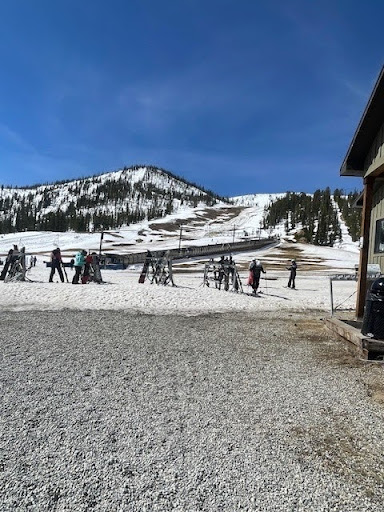
This year, there was a large snow drought in Colorado. According to snowbrains.com, Monarch Mountain saw just over 100 inches this season and closed on March 29, earlier than the previous years. Joel Gratz, CEO and head meteorologist of OpenSnow, gave some insight into the factors that make for a low snow pack year.
Gratz stated, “This is the lowest snowpack Colorado has seen in the past 30-40 years, and perhaps even further back in time.” It demonstrates the rarity of these droughts and how uncommon a snowpack similar to this really is. Gratz also noted, “That said, streamflow data from the Upper Colorado River shows significant droughts many times during the past 1,000+ years, so the lack of snow this season has likely happened before.” Even though this season is very rare, it is not the first time something like this has happened. Now we know how uncommon this season was, but what caused it?
Even though it may be easy to blame climate change for the lack of snow during the 2025-26 winter season, Gratz disagrees. “Climate change is generally making temperatures warmer, but it is not significantly changing the amount of precipitation across the western U.S.,” said Gratz. This explains that climate change is not necessarily affecting the precipitation, but more by increasing temperature. Well if it’s not climate change, what caused the drought? Gratz continued to explain that Colorado had an unfavorable storm track this season. Just look to the northeast; he said, “While Colorado was dry and warm, the northeastern United States was generally cold and snowy.” Essentially, this winter was just a lot of bad luck for Colorado. Now that they understand what caused this, what did it affect?
One thing that was affected by the drought was skiing. Gratz stated, “Fewer people visited ski resorts, which led to lower revenue at mountain town businesses.” Not only did the snow affect skiers morale, but it also impacted the economics of a huge industry in Colorado: the ski industry. Because of the less than optimal conditions, less people made the effort to visit these resorts, leading to a very hard economic year for the ski mountains and their towns. The low snowpack also has consequences for the spring and summer months. Gratz explained, “Snow is important for water, so a lack of snow is a large problem. That said, if we can have above-average precipitation during spring, summer and fall, that could help to somewhat reduce the magnitude of the problem.”
After this low-snow winter, there is a hard question that is on everyone’s mind: Is this how every winter is going to be? Gratz isn’t certain: “Temperatures will likely warm, but I have no idea about trends in precipitation. With warming temperatures, that could mean less snow at lower elevations and more melting during fall and spring. The antidote is to focus on the higher elevations.” There is no obvious answer to the question, which is neither good nor bad news.
In conclusion, this winter may have felt frustrating and unusual, but it is not the end of the world. That being said, it is not easy to predict what is going to happen in the future. What is clear though, is that snowpack is very important for Colorado in many ways.